
 Image 1 of 2
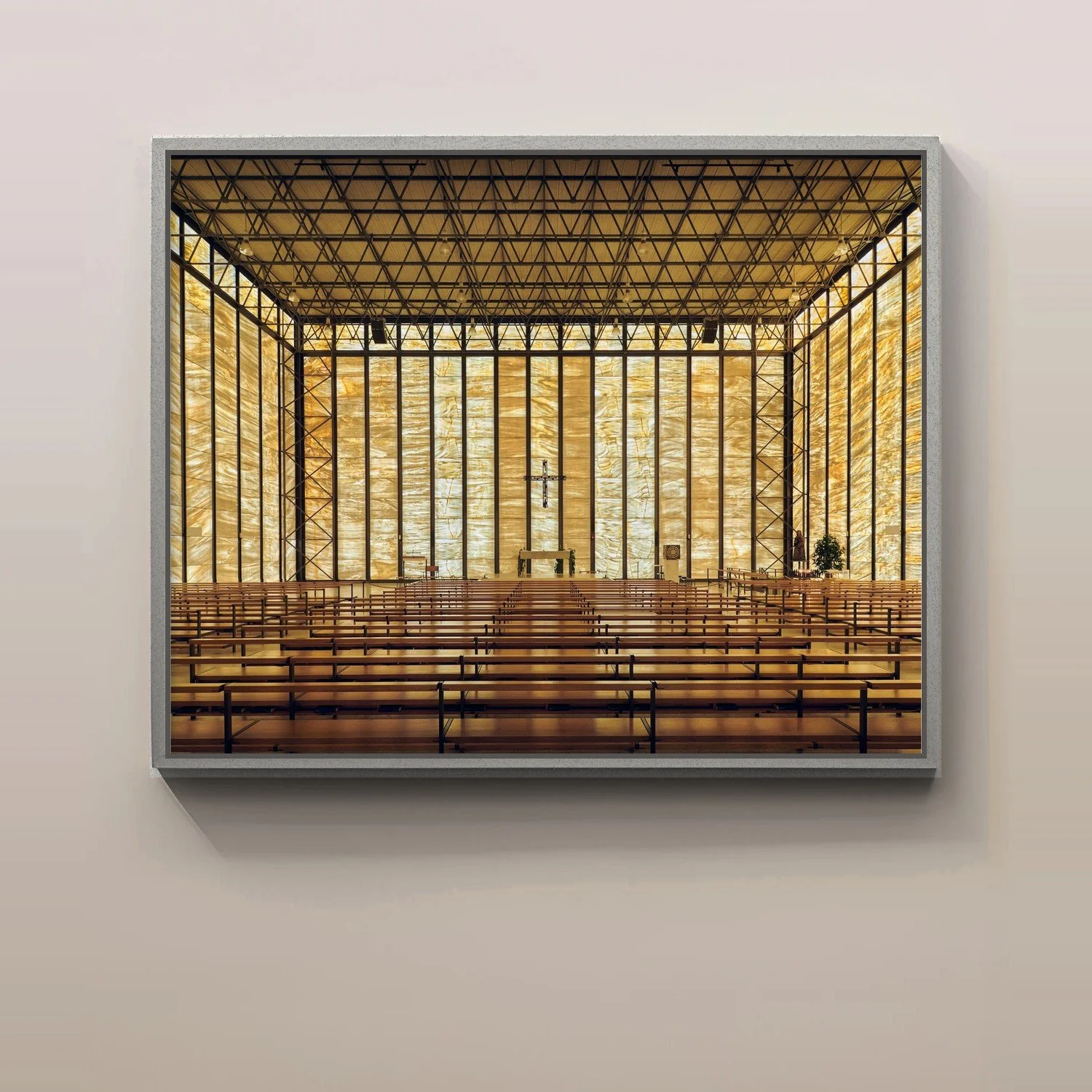 Image 2 of 2
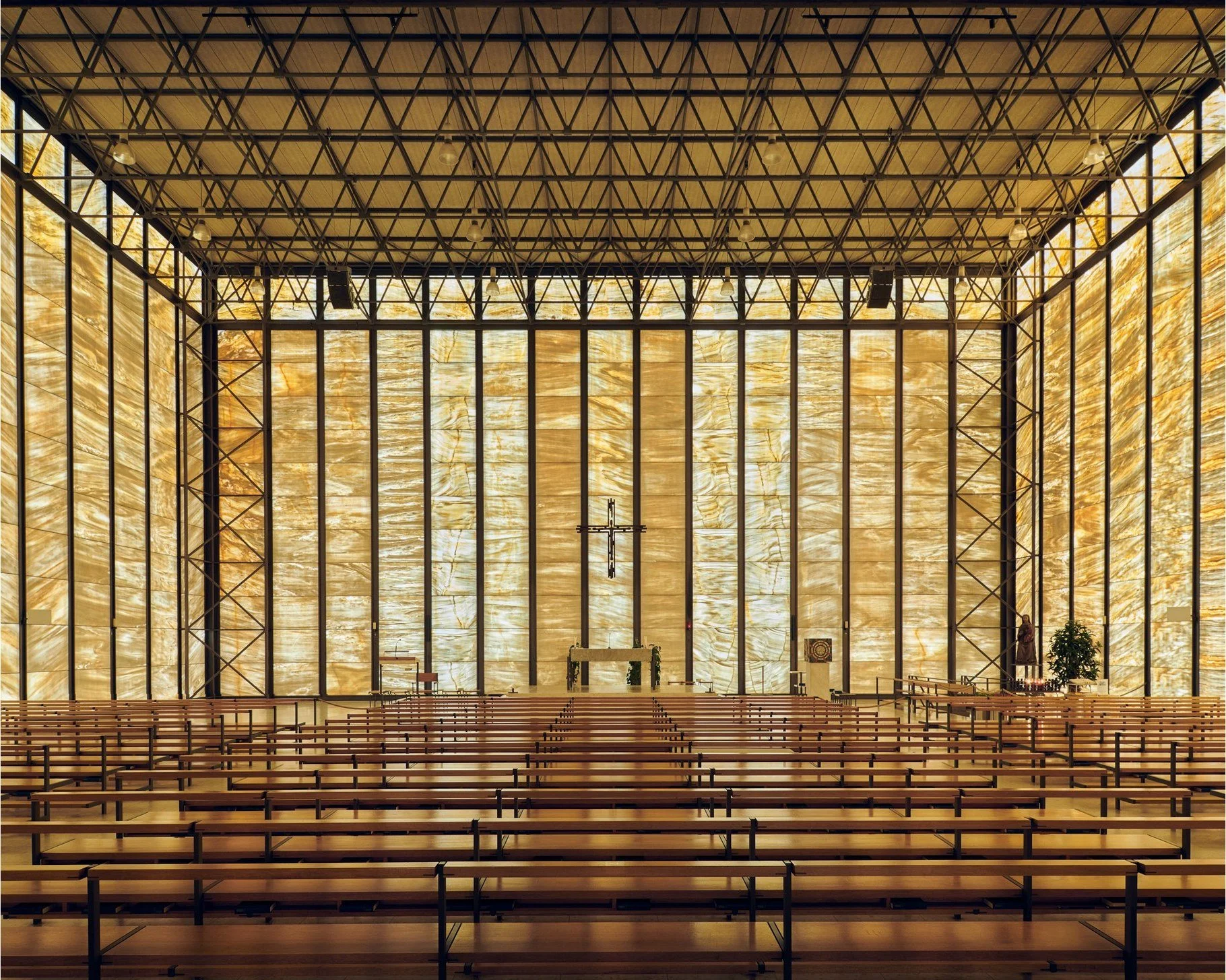
Franz Füeg, 1964–1966. A simple steel frame infilled with thin slabs of marble – an idea of almost minimalist purity. When the sun strikes the walls the stone glows like amber and the whole room becomes a lantern, its veins revealed like the lines of a map. Few buildings demonstrate so clearly how light itself can become the true material of sacred architecture.
Lambda archival C-type print, unmounted.
150 x 120 cm – limited edition of 10
80 x 70 cm – limited edition of 10
Signed and numbered by the artist, with a blockchain-registered Verisart Certificate of Authenticity.
About the project – Sacred Modernity: The Holy Embrace of Modernist Architecture
Sacred Modernity documents the dramatic shift in church architecture across post-war Europe. Spurred on by the modernising impulses of the Second Vatican Council in the early 1960s, the Church searched for an architectural language that showed it was still relevant to the modern world. This was the period when the church married the atheist architect and bore a child of pure form. Half a century on, the series traces how these buildings' materials and ideals have matured and patinated. Begun during the Covid lockdowns, when only the churches remained open, the four-year project became the book Sacred Modernity (Hatje Cantz, 2024), featuring 100 churches from across Europe, and was exhibited in Vienna in 2024.