



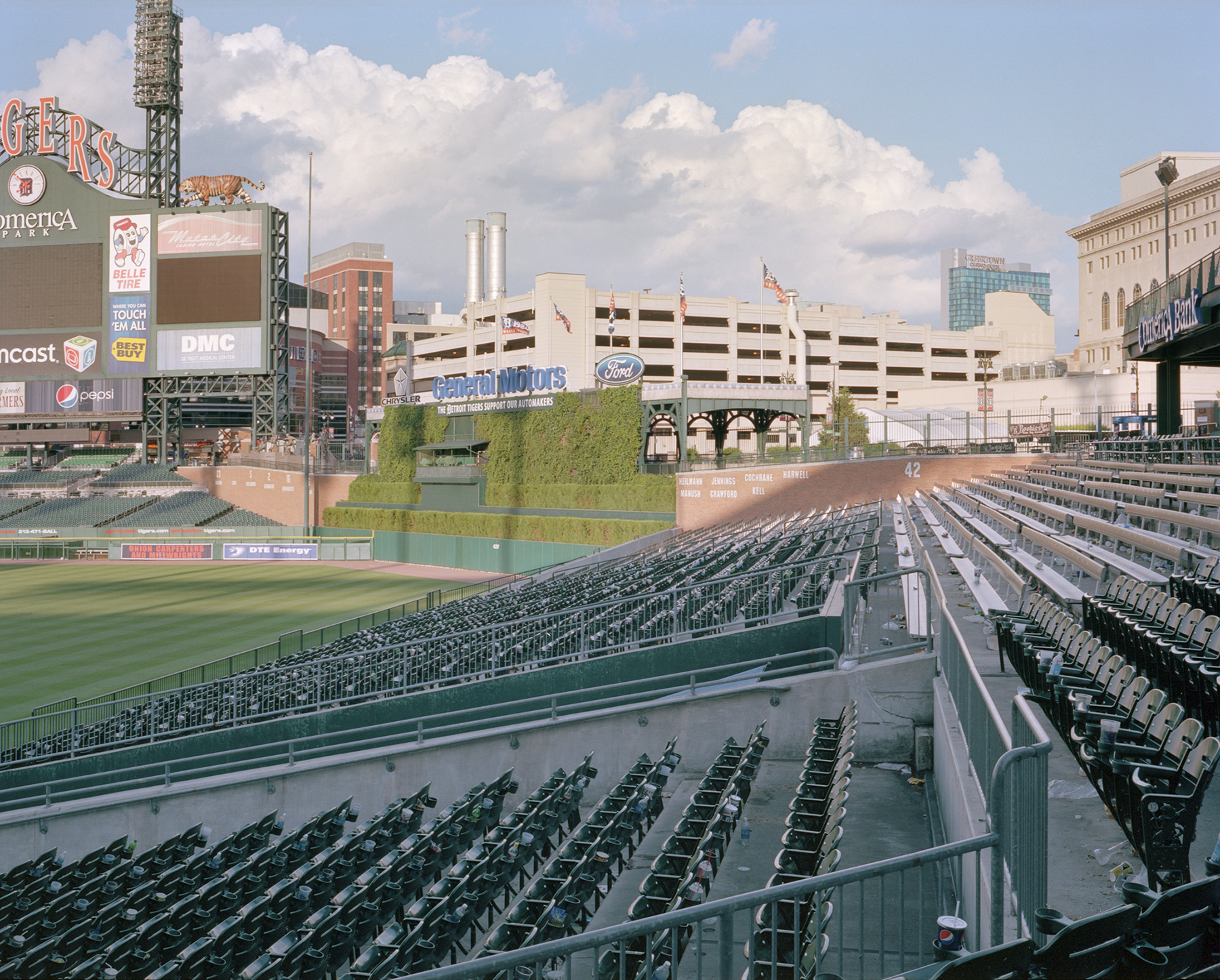







Motor City – Detroit
Detroit has long been the focus of articles observing its slow and regressive contraction. As a result of race riots in 1969, a slow and relentless trickle of white middle-class inhabitants to beyond the apparent ‘safety’ of Detroit’s eight mile city limits meant that the growth spurt of the city’s urban sprawl was stunted. It was naivety to foreign competition, not racial intolerance, that affected Detroit’s growth in the 1980s and 90s, and an emerging global car market quickly capitalised on the results.
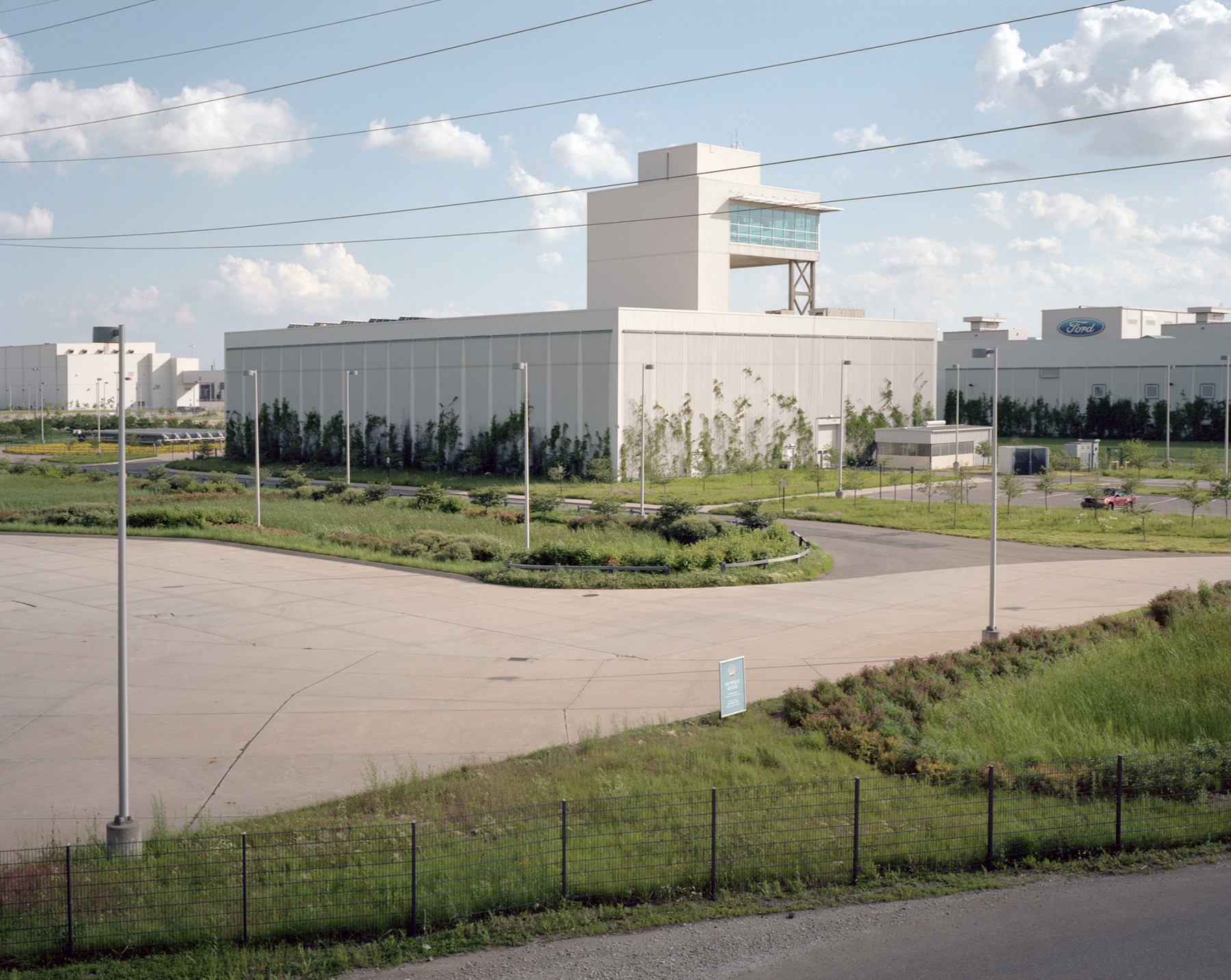
Yet with recession now mounting a blow that has shaken the global economy, where does this leave a city so reliant on this floundering industry? The numerous attempts to support and re-launch the city’s dwindling commercial investments and population have been well intended, but once a city like Detroit – one so closely linked to a single commercial enterprise – begins to slump, only a miracle in free-market planning from the likes of Chrysler and Ford can salvage the city’s ill-fated demise.
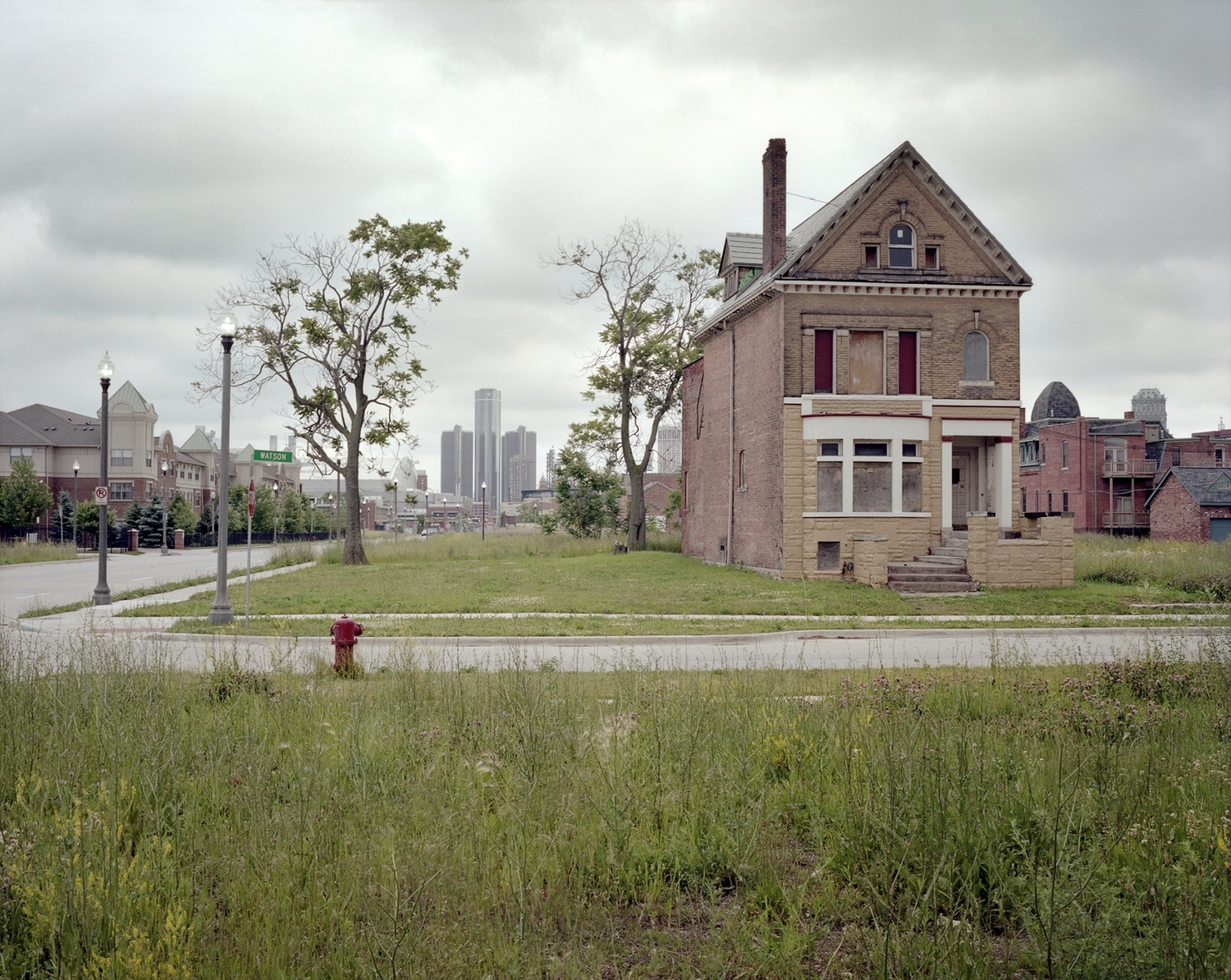
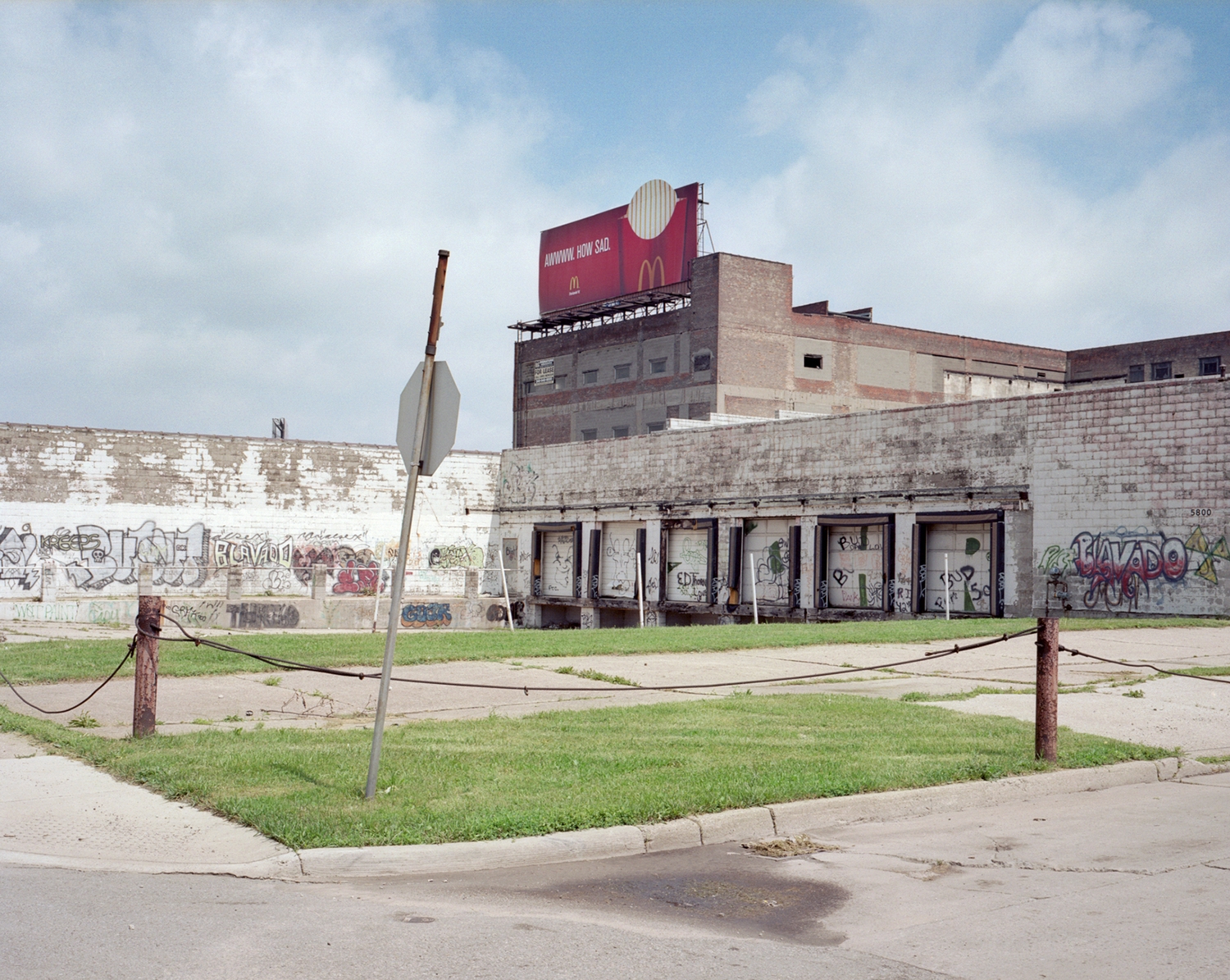
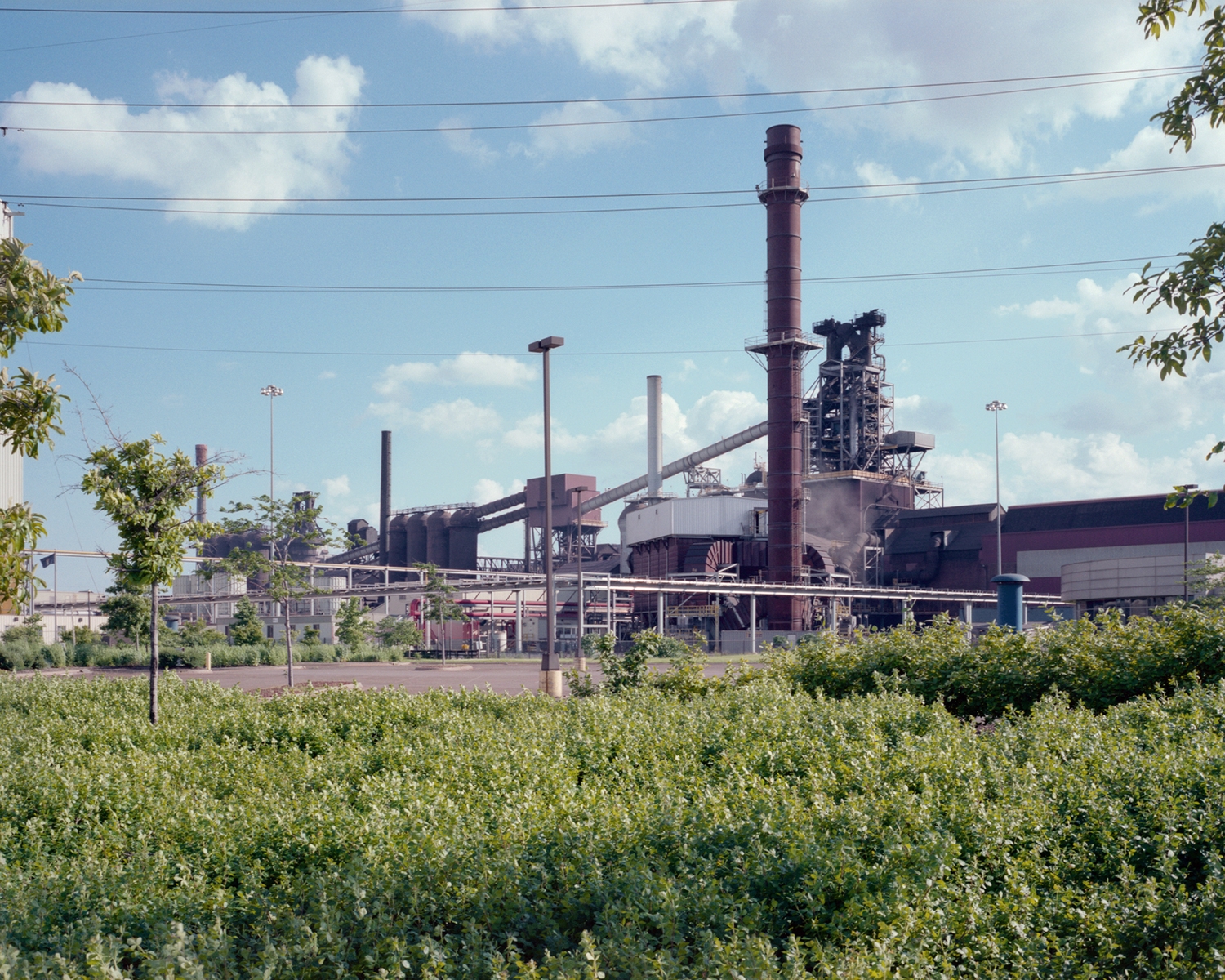
Social change and the adaption of landscape for industrial and residential use have always inspired my work, and Detroit is perhaps the finest example of a modern city built out of an industrial revolution that has expanded beyond sustainable foundations. Media attention over the US government’s bailout of the big three car manufacturers at the beginning of the financial crisis drew me to a city landscape that might illustrate the retraction of America’s dominant position as an industrial power. I wanted to observe what effect industrial decline has on the local landscape and its inhabitants, as well as exploring the efforts of local people and government in halting the urban and social decline.
The future of the city does not rely on misconceived bailouts from governments blinded by state pride, but in looking to new industries that have an opening in the world economy. Detroit is probably the first and finest example of a city that will continue to lose its tightly-partnered industrial relationships and begin to contract. In many cases it could be better to accept this contraction and invest money in growth elsewhere, while deciding what new function deserted inner-city spaces could acquire. One popular theory is to simply let them return to their original rural state.
Available in editions of 10, 100 × 80 cm.
(c) Jamie McGregor Smith 2019