
 Image 1 of 3
 Image 2 of 3
 Image 3 of 3
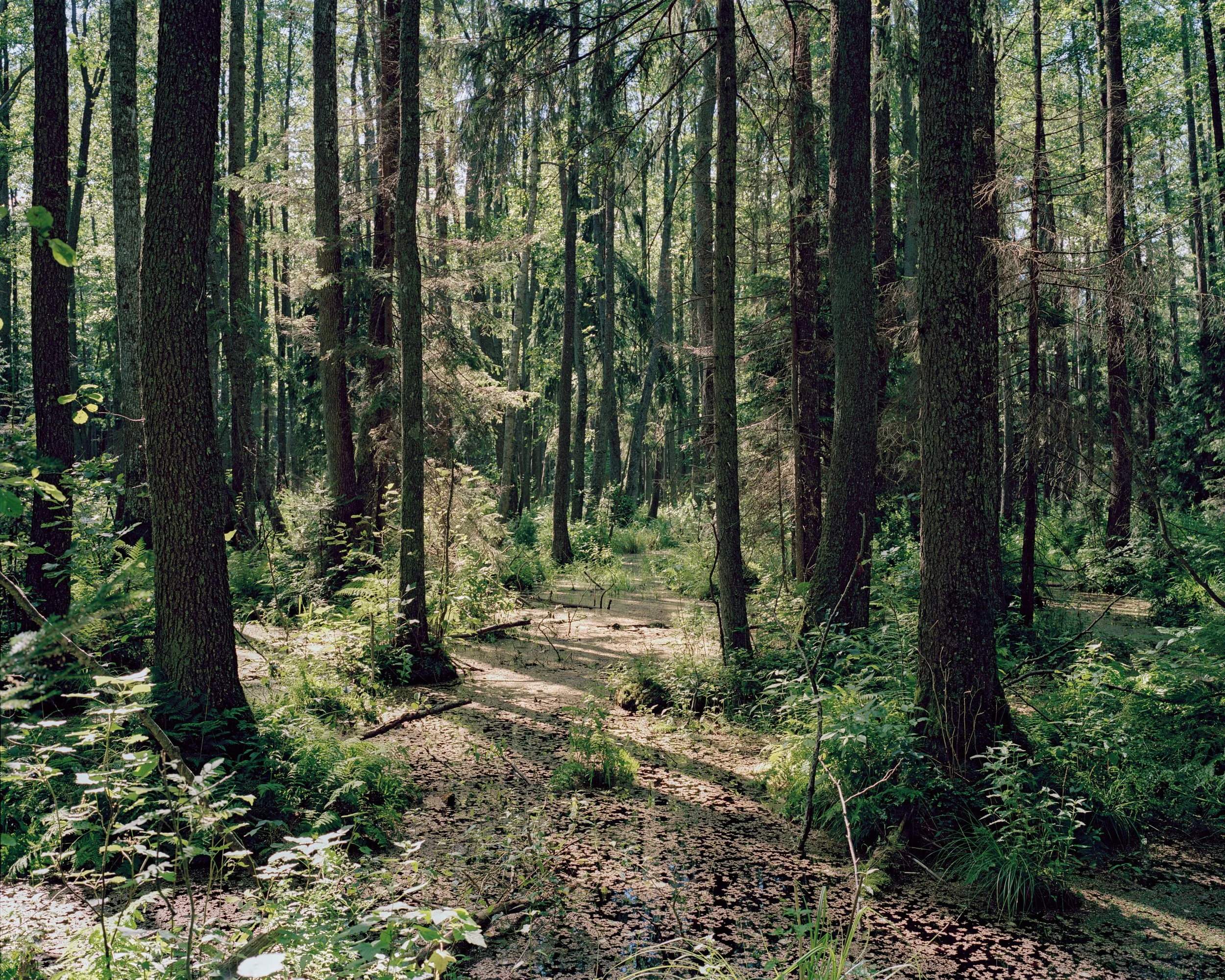
Black alders were among the first trees to colonise Europe after the last ice age. They thrive in flooded ground that few other species can tolerate, creating unique swamp habitats. Nitrogen-fixing bacteria in their roots let them grow in poor soils, and in return the tree feeds the bacteria sugars. Their seeds float and are carried on the water to new ground.
Archival analogue hand print from a large-format colour negative.
96 x 120 cm – limited edition of 5
70 x 80 cm – limited edition of 5
Signed and numbered by the artist, with a blockchain-registered Verisart Certificate of Authenticity.
About the project – Białowieża: Europe's Last Primeval Forest?
Straddling the border between Poland and Belarus, Białowieża is one of the last fragments of the ancient forest that covered the European plain after the last ice age. It is a UNESCO World Heritage site, home to the largest free-roaming herd of European bison. In 2016 the Polish government tripled logging quotas, including in old-growth stands. The decision drew legal action from the European Court and a warning from UNESCO, and it divided local communities. Photographed on large-format film in 2016 and 2017, the series records the forest's beauty alongside the logging that threatens it. The prints were first exhibited at Foto Wien 2022 in collaboration with Greenpeace.